The Writer In The World

Joan Didion once told an interviewer about being in Las Vegas and watching a woman in a trench coat walk through a casino. Something about the woman, her demeanor, the coat, or the hour caught Didion’s imagination. She said she needed to figure out who the woman was and why she was there. The result was her 1970 novel, Play It As It Lays, which was made into a film starring Tuesday Weld.

Sunday was my friend’s birthday. We celebrated with a trip to the art museum and lunch. I didn’t see anyone in a trench coat, but I did see a woman of about twenty posing coquettishly in front of Anselm Kiefer’s Burning Rods. This monumental painting is approximately 11 by 18 feet. Comprised of lead, iron, porcelain, and straw, it depicts a charred post-apocalyptic landscape. Kiefer created it following the Chernobyl nuclear disaster as a statement about our choices and possible future. Even without knowing much about the work, its scale and palette oppress.

Not so for the woman in wrinkled khaki shorts, pink t-shirt and flip-flops. Or for the three young women—her companions—who photographed her with small point and shoot cameras as she transitioned through expressions. She tilted her head and smiled coyly as her hair fell over one eye. She pouted. Raised her chin. Looked over her shoulder. Tossed back her head and stood, hands on hips, in profile to the ruin of Kiefer’s dark vision. Her companions aimed, and clicked.

The irony of the scene stays with me. I want to know what it meant. I’ve imagined alternates as well: what if another person had entered the gallery? Anselm Kiefer? A former Chernobyl worker? Or a resident of Iwaki, Japan—a village contaminated by radiation leaks from the Fukushima Daiichi plant? Why did the posing woman choose that painting as her back drop? These, and questions like them, are pebbles in my shoe that beg for attention.

Yesterday I read a wonderful letter by Michael Saur in The Metropolitan Diary—a column of observations about life in New York. The Diary is a regular Monday feature in the New York Times. Sauer wrote:

Dear Diary:

Every day, from 9:30 to 12:30, I go to the same Starbucks, on Crosby and Spring Streets in SoHo, to write.

I have seen a pigeon walk into the place and get lost by the milk bar.

I have seen a professional poker player manicure his hands.

I have seen a destitute man go frantically through a just-published Jack Nicholson autobiography because he used to be Nicholson’s chauffeur.

I have had the Jack Nicholson chauffeur peek over my shoulder, shrug and say, “I am not stealing what you are writing.”

I have seen people bring their own TV sets and watch the news.

I have heard a drunken man say into his cell phone, with exasperation in his voice, that he was not drunk but only went grocery shopping.

I have seen ladies in fur having their handbags stolen.

I have had a New York Police Department detective ask me whether he could mark my computer with an invisible pen in case it gets stolen.

I have seen the pen turn out not to be so invisible after all.

I have seen German tourists bring their own Wasa bread for breakfast.

I have seen the same people lose and gain large amounts of weight.

I have seen people with a full set of teeth losing them.

I have flirted for weeks with a beautiful girl who turned out to be a boy.

I have written three books there. They have nothing to do with the above. Or everything.

I’m not lucky enough to live and write in New York—a city I love like few others. But every day—in moments too numerous to count—the universe offers its gifts.

Posted in Uncategorized | Tagged , , , , , | Leave a comment

Closing Borders—And I’m Not Talking Arizona

I stopped by the two Borders bookstores closest to my home on Friday—the first day of the Borders liquidation sale. I wasn’t shopping for bargains, although it seemed that plenty of people in the long lines at the register were. Instead, I came to see those stores for the last time. I don’t expect to return to either location—even as prices are slashed to pennies on the dollar. Great deals may await the savvy shopper…but I’ve never been able to divorce a possession from the circumstances of its acquisition. That’s why you won’t find me trampling fellow-shoppers for a big screen TV at a Wal-Mart Black Friday sale, or trolling pawn shops for items that some desperate customer could not redeem.

To be clear: Although I prefer a small, independent bookstore to a chain any day, I’ve certainly purchased books from the big boxes of Borders and Barnes and Noble and from the “virtual boxes” of Amazon and Alibris too. I’ve given my money to the “bigs” as a matter of convenience (I saw a book at Borders and wanted it), or price (read a review of a book, then ordered it on Amazon for a better deal), as well as need (Alibris had a book I wanted that was out of print). Yet, I’ve always returned to the indies in the hope —fulfilled many times—that I can discover a new writer because that store respects the work of a mid-list author and isn’t interested only in blockbuster sales. In recent years, as more and more independent stores have been forced out of business, I’ve reduced my “box” purchases to practically nil. And I’ve ordered books from indie stores all over the country. Not because I have lots of disposable income and don’t mind paying for postage, but because I understand the consequences. If I want the variety and intimacy of a store that does not buy books by the pound, then I need to support that store. I buy less, but it matters more.

And that, in large measure, is exactly what Borders lacked: buying customers. Yes, the cafes were full—thanks to free wifi. But more often than not, customers came with laptops and paperwork, and took up residence as though the store was a well-endowed library rather than a retail establishment.  Many didn’t even bother to buy coffee. Just last week I saw an entire study group talking over math problems in the Borders café while nibbling on snacks they retrieved from baggies in their backpacks.  But why pick on students alone? I’ve seen middle-aged men and women enter the cafes with an armload of books and magazines more times than I can count. Many of these people bought coffee, but few left with any of the titles they had been reading. Fewer still returned their slightly worn materials to the shelves.

Business analysts cite any number of reasons for Borders’ demise: over-expansion into costly retail space, failure to move quickly and decisively to e-books, the growing popularity of e-tailers and a struggling economy.  Many are happy to see it go. They blame Borders for the demise of hundreds of indie bookstores. But that’s not true. We are the ones who killed off those little stores—by shopping at Sam’s Club or Costco or Borders or any big box instead of the little shop down the block. We are the ones who were willing to forego the relationship with a store clerk who knew us and could recommend a title in exchange for 30% off a best-seller. We are the ones who enjoyed hours of free wifi in a café setting, wore out magazines and read entire books—all without spending a cent.  And ultimately, it was this same sense of entitlement—of actions without consequences— that destroyed Borders. The management at Borders may have made poor business decisions, but we, in our greed and grazing—as if going to a bookstore was a spectator sport—are complicit as well.  Conservative pundits like to use the phrase, “Freedom isn’t Free.”  True, but we’ve been trying to make it as cheap as possible.

Fallout from the closing of our country’s second largest bookstore chain will be felt in many sectors of our economy. Nearly 11,000 people are losing their jobs. Analysts are predicting that publishers will react to the decline in shelf space by bringing out fewer titles. And don’t forget the thousands of individuals—from deliverymen to printers, proofers, designers and editors in that industry alone. And what of the darkened shells that once were Borders stores? How do those now-empty spaces affect the businesses around them? I recommend the ‘broken window effect’ as a sign of communities under stress. If you stop to think about the ramifications, the closing of Borders can feel ominous.

So what’s to be done? It’s too late for Borders, but not for everyone else. We must wake up and step up to the situation. Rather than move your laptop over to Barnes and Noble, why not go to the library? Study there. Then visit your local bookstore. And don’t take up residence to read a book—three chapters at every visit— like some freeloading uncle. Buy the book. Take it home. Read it and tell your friends about it.

We are all responsible for the opening of Borders. And we share in the reasons for its closing. What do we value?  The cheapest product at the cheapest price?  There isn’t a single segment of our society that is invulnerable.  If we don’t value freedom, we won’t pay for it.  If we don’t value originality, we won’t pay for it.  If we don’t value the need to make a living, we won’t pay for it.  In the end, it isn’t hard to imagine the cost.

Posted in Uncategorized | Tagged , , , , , , , | 5 Comments

We Are Stardust…

I first drove to Iowa City a number of years ago, to attend a week-long fiction workshop at the University of Iowa Summer Writing Festival. As I write this, I can nearly capture the “me” of that first visit: excited, nervous, tortured by how little I’d accomplished, and terrified my scant output labeled me nothing more than a dilettante. Still, the thrill of hearing well-known authors at evening lectures, the charm of “elevenses” (mid-day discussions and presentations), and the luxury of lingering over my new journal in a coffee house had me in thrall. That trip also meant visits with my friend Mike, a tremendously talented poet and fiction writer who was enrolled in the Iowa Writers’ Workshop.

The Workshop is the oldest writing program in the country. It’s the stuff of legend—as noted for its accomplished faculty as for its graduates.  Mike had moved to Iowa with his wife and children when he was accepted into the program. I hadn’t seen him for months…and I could hardly wait to hear about what he was learning and writing.

One of the first places he took me was the U of I library. Flannery O’Connor was a graduate of the program and Mike wanted to show me her Master’s thesis. I remember my near-disbelief when he handed it to me. My pulse pounded in my ears as we opened it and began reading the first lines of her short story, The Geranium. I was so overwhelmed that
I could hardly concentrate.

It’s nearly unbearable to linger on that scene. Innocence can kill you, I’m sure of it.
Yet, I would not trade that day, the breathless reading of O’Connor’s story, and my own belief in the great work that lay ahead for Mike—and for me.

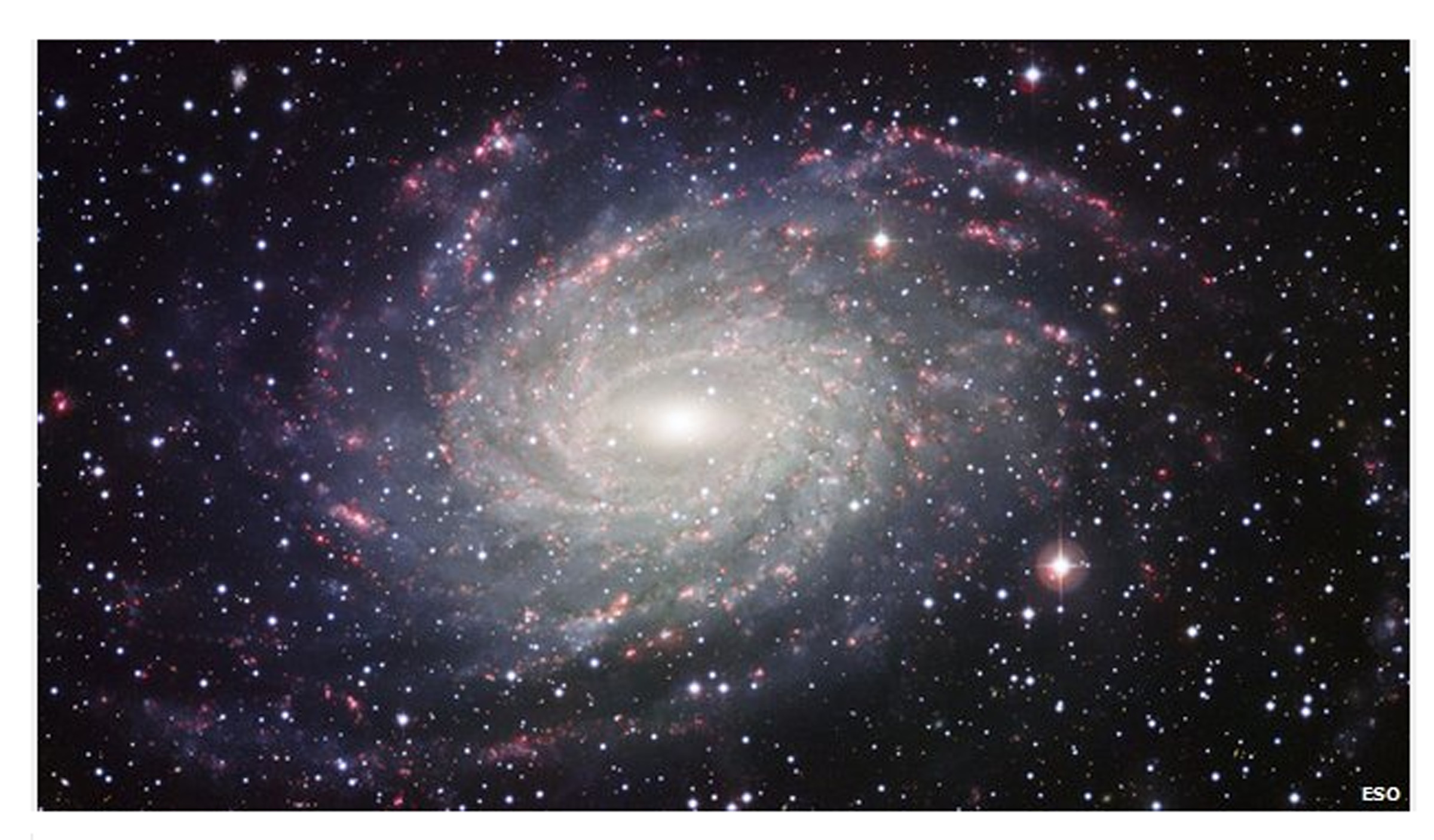
I was reading about stars earlier this week in the American Heritage Dictionary of Science. I learned that stars vary in size from those slightly larger than the earth to those several million times as large as the sun. Our sun is considered a star. The majority of stars, including the sun, are divided into five major types: supergiants, giants, dwarfs, white dwarfs and neutron stars. These are all found in galaxies, of which our Milky Way is one. A galaxy typically contains billions of stars. There are billions of galaxies in the universe.

I cannot grasp those numbers and categories. Still, I can “feel” the meaning of a star in one of my favorite poems of all time, “Two Headed Calf” by Laura Gilpin:

Tomorrow when the farm boys find this

freak of nature, they will wrap his body

in newspaper and carry him to the museum.


But tonight he is alive and in the north

field with his mother. It is a perfect

summer evening: the moon rising over

the orchard, the wind in the grass. And

as he stares into the sky, there are

twice as many stars as usual.
.

I’ll be driving to Iowa again at the end of this week. I’ve been invited to participate in the Iowa City Festival of Books. I am not one of the “names” being touted in the Festival literature; not among the writers strategically placed at tables for the fundraising dinner. There are hierarchies of stars after all.

But, on Saturday, July 16th, I will read from my debut novel, Dancing With Gravity, in the library at the University of Iowa. My friend, Mike, who took me there so many years ago, has promised to be in the audience.

Posted in Uncategorized | Tagged , , , , , , , , , | 1 Comment

Coming Down From the Mountain

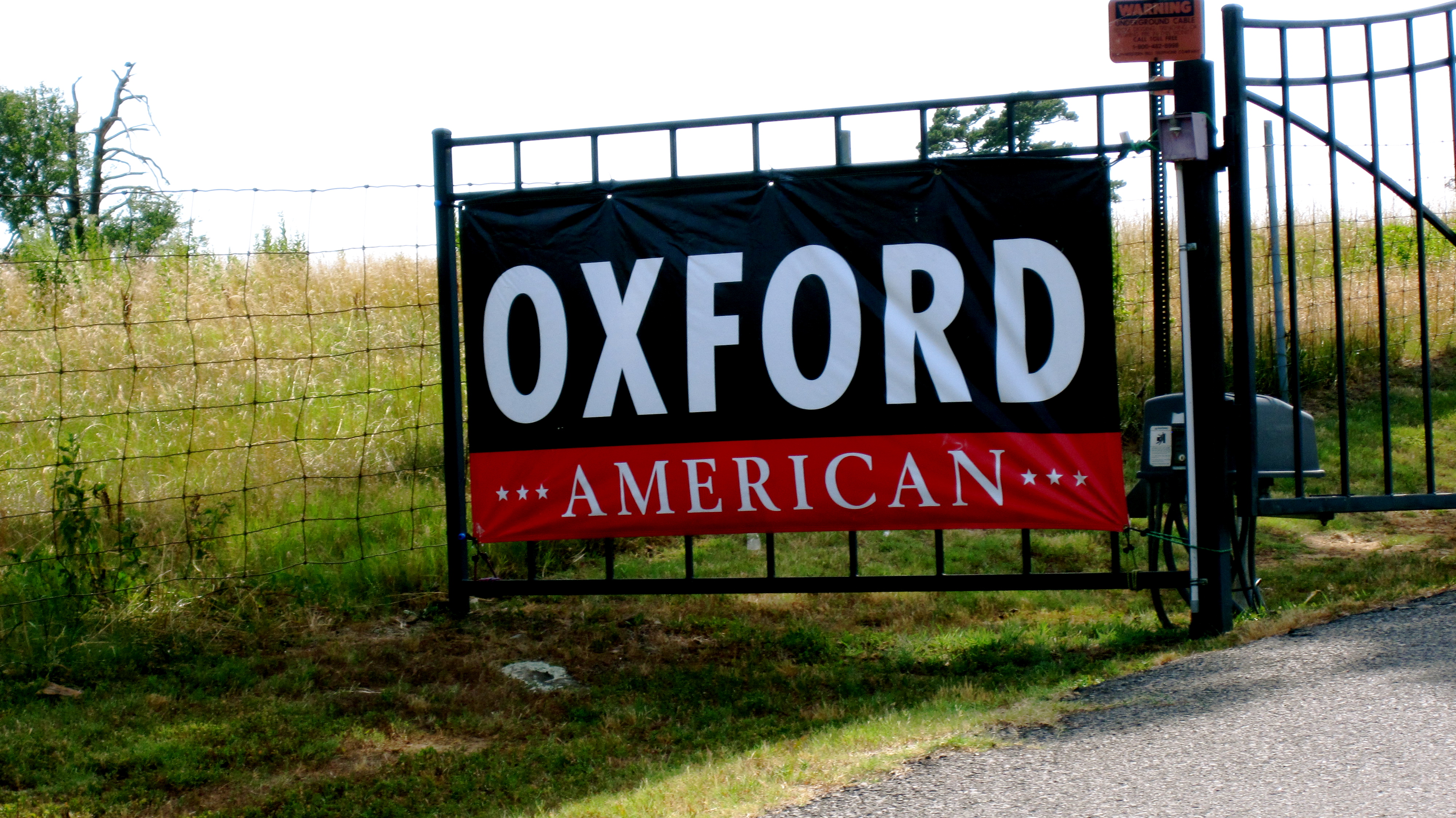
Why does a writer attend a writers’ conference? It’s a question I asked myself this year when I applied to the Oxford American Summit for Ambitious Writers. The quick and easy answer for me was the Oxford American itself. I’ve admired that magazine for years, I’m drawn to the work of Southern writers, and wanted to meet the people who so obviously value Southern culture.

But I was never comfortable with the conference title—at least the “ambitious” part. At the negative end of the spectrum (which Webster’s Ninth Collegiate chooses as it’s first definition), ambition may be defined as “an ardent desire for rank, fame, or power.” In that context, it seems a secret ego indulgence best reserved for revenge fantasies. Not that I haven’t had them…and still do. But these are not thoughts I readily admit, or share.  Even a more benign definition—that suggests ambition as simply “wanting something”— made me nervous. What if I wasn’t clear about what I wanted? What if I didn’t get it?

The OA Summit was held at the Winthrop Rockefeller Institute on Petit Jean Mountain, just outside Morrilton, Arkansas. It’s the former headquarters of Winrock Farms, the mountaintop home of the late Governor Rockefeller. After his death, and in partnership with the University of Arkansas, the site was converted to an educational institute and conference center. The manicured grounds—located amid a rural setting and adjacent to a state park— include an orchard, ponds, gardens, and a series of buildings that house meeting spaces, single rooms and furnished apartments. Mr. Rockefeller’s story is everywhere: books in the gift shop and in our welcome bags, a film (available online and shown at our welcome dinner), a museum, on explanatory signs posted throughout the grounds. There’s a good bit of emphasis on his attempts to forge his own path in the shadow of his famous family. One brochure describes him as a rebel, innovator, reformer and catalyst. There’s even more emphasis on his legacy. Although he accomplished a good deal in his lifetime, one gets the feeling that he always struggled to “prove” the value of his chosen path. Judging from the reading material, the issue hasn’t been put to rest, even in death. It’s an interesting parallel to what many writers feel—minus the millions of course.

Marc Smirnoff, editor of the Oxford American, opened the conference by generously stating that the writers in attendance had been chosen; that not everyone who applied was accepted. He stressed that the OA Summit was not the place to work connections, trade phone numbers for an end run to publishing, or pitch to agents. Hearing those words, I felt I’d been given a reprieve by the governor. I still wasn’t sure why I’d come, but I knew I hadn’t come for competitive networking.

The fiction faculty at the conference included Heidi Julavits, Tom Franklin, Kevin Brockmeier, Christina Henriquez, and Wells Tower. Jay Jennings and Scott Huler represented non-fiction. In addition, Marc Smirnoff conducted special interviews with William Whitworth, editor emeritus of the Atlantic, the non-fiction writer Pico Iyer and David Remnick, editor of the New Yorker. It was a dazzling line-up of talent and perspective.  I’m ashamed to admit that many of the faculty names were new to me. I did, however, read at least one book from each person before I arrived in Arkansas. Their work covers everything from baseball to Communism, the darkly murderous actions of Vikings or the “little murders” that can decimate a contemporary marriage. These voices are strong and assured, and I would have been so much the poorer for not having read them.

I was assigned to Tom Franklin’s workshop and there I found myself among a group of really talented writers who were also careful and perceptive readers. It’s been years since I put a story in a workshop, and I wasn’t really interested in going through that process again. However, I was delighted to rediscover the pleasures of close reading. I learned as much from discussions of other people’s work as from my own.  I also got some terrific suggestions on how to fix a problem story that I liked, but that just wasn’t working. The rewrite is the next thing on my agenda.

In addition to workshops and riotous Southern cooking at every meal, the Summit offered softball, an archeology tour, cooking demonstrations, swimming, yoga and hikes. There were poetry readings at lunch, a radio play and quiz show at night, music, cocktail receptions and book signings. The celebrated chef, Lee Richardson, prepared our farewell dinner. On our last day, Marc Smirnoff also facilitated a panel discussion about writing with the assembled faculty, which proved to be a highlight in a week of first-rate experiences. Imagine a gathering of writers whose work you admire…then discover they’re talking openly about their worse experiences with editors, as well as their best; the questions they most hate hearing from readers and other writers; their (none too sympathetic) views of how family commitments impact their time for writing, and how they feel about bloggers. The revelations felt like inhaling pure, cool oxygen on a red air quality day.

The other writers at the conference—attendees like myself—were a fascinating bunch. They came from places as far away as Australia, or as close as Arkansas. They ranged in age, background and personality. Some, like myself, had a book and more to their credit, while others had committed to writing only in the last few years. A few told me they viewed the Summit as “a week at writers’ camp” while others bristled at the idea that we were there for anything short of serious work. Although most of the other writers were warm and welcoming, a few filled in at the extremes: I had lunch with one man who started talking the moment I sat down…didn’t ask my name or input…and never stopped his monologue, even after I had eaten my lunch, excused myself and stepped away. Another, I learned, spent the week mostly mute.

Two days before I left for the OA Summit, I treated myself to lunch at Pei Wei. I received the following fortune in the cookie at the end of my meal: “A visit to a strange place will bring you renewed perspective.”

I’ve been home for a week, and for reasons I don’t quite understand, I’ve been dreaming about my experience in Arkansas every night since my return.  I’m still sorting it all out. But one thing I know: the cookie was right.

Posted in Uncategorized | Tagged , , , , , , , , , , , , , , , | 1 Comment

Pandora, Dreaming

Do you dream? In color? Black and white? Do you remember your dreams? Are they pleasant, or harrowing? I’ve sometimes laughed so hard at some event in a dream that I wake my husband and myself. I’ve also catapulted into consciousness with the fast breathing and panic of the pursued. My therapist insists we make our dreams. But I knew a woman who believed her dreams offered warnings from some unseen force—and, uncannily, it seemed the case.

At a recent reading, the poet Howard Schwartz spoke about keeping a dream journal and how those captured images inform his work. I’ve sporadically tried keeping a journal as well. Although I’ve never stayed with it more than a month at a stretch, I’m always surprised at how much I’m able to recall—and describe—when I follow this discipline.

So it was with particular interest that I attended a guided tour at the Pulitzer in St. Louis titled “Dreamscapes.” This exhibition includes diverse works from artists such as Roy Lichtenstein, Joan Miro, Brancusi, Chirico and others. Among my favorites were two installations by Janet Cardiff. In both of Cardiff’s pieces, one picks up the receiver of an old-fashioned phone and hears Cardiff—sounding as if she’s only half emerged from a drugged sleep—recounting a complex dream. Each phone plays a different dream; each recording manages to place the listener immediately (if voyeuristically) inside the experience. The effect is intimate and disorienting. As a writer, I particularly enjoyed hearing someone tell me a story, and then letting my imagination take over. I also enjoyed being able transgress the museum’s ever-so-vigilantly enforced “you must always stay at least three feet from the art” rule. Although our group was small, and comprised of seemingly well-behaved adults, the gallery assistants scrutinized our every move for the opportunity to warn us away from the art. It was obvious they enjoyed their work. Two women in our group (I was one of them) were upbraided for daring an eighteen-inch proximity. My tour-mate reddened and was clearly offended when corrected. I opted to see the interaction as my own surrealist experience: a kind of unannounced performance piece by the Pulitzer to imbue our collective dreamscape with ubiquitous guards.

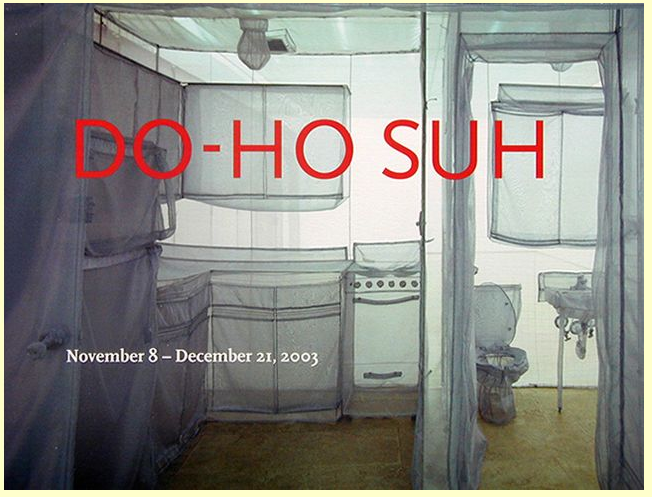
One of the most dramatic pieces in the show was a red fabric stairway by the Korean artist Do Ho Suh. Part Disney hologram, part Cristo for interiors, part outtake from “The Shining,” the staircase descended to several feet above the museum floor. Its handrail was missing. Some in our group wondered at the significance of the absent rail, the red fabric, and the stairs that remained out of reach. A few insisted the work could only have been achieved with a CAD drawing program. Then our guide informed us that Suh’s pieces are 3-D recreations—in sheer colored fabrics—of places he’s lived. These fabric sculptures are sewn by master seamstresses in Korea, based on Suh’s exacting instructions and include the interiors of his past homes—down to details such as knobs on a kitchen stove. This new knowledge completely transformed my reaction to the art. I thought of Proust’s Madeleine or the contents of Tim O’Brien’s infantry pack. The staircase transitioned from symbol to obsession—an idea that was only reinforced when our guide told us that Suh’s entire 3-D fabric apartment is designed so that it can be folded into a suitcase and carried with him. Place is important in writing. In my own dreams, I often revisit a particular place from my history. Each time I find myself back there, the events that occur are predictable and upsetting enough that they often wake me. The idea of literally carrying that place with me both fascinates and repels. Imagine an entire apartment—a place important to you for whatever reason—created, then folded away into a suitcase you carry with you. The weight of memory, the weightlessness of dreams.

To learn more about Do-Ho Suh, go to:

http://www.brown.edu/Facilities/David_Winton_Bell_Gallery/suh.html

Posted in Uncategorized | Tagged , , , , , , , , , , , , , , , , , , , , | Leave a comment